
by Jennifer Kinley
Sometimes a painting captures your attention before you can even explain why. That was my experience with the work of Cleveland Artist David Buttram. I loved it. Beyond that initial response, I recognized his paintings- of people and places in the city- depict ordinary moments in a way only one unique person could possibly do. David Buttram. It made me want to see how other moments are observed and reflected through his lens.
I reached out to David earlier this year, and he generously agreed to become the first artist featured through Watershed Archive.
I can see David’s paintings are a reflection his own character and perception of everyday scenes in the city he knows. There is a calmness, a solemnity in his observations. In West Third II, a smattering of people wait for the bus in winter. The daylight reflects on hoods, jackets, bare tree branches. There is a quiet sense of anticipation in this daily routine, with the people, the winter light, and the city all sharing the scene.
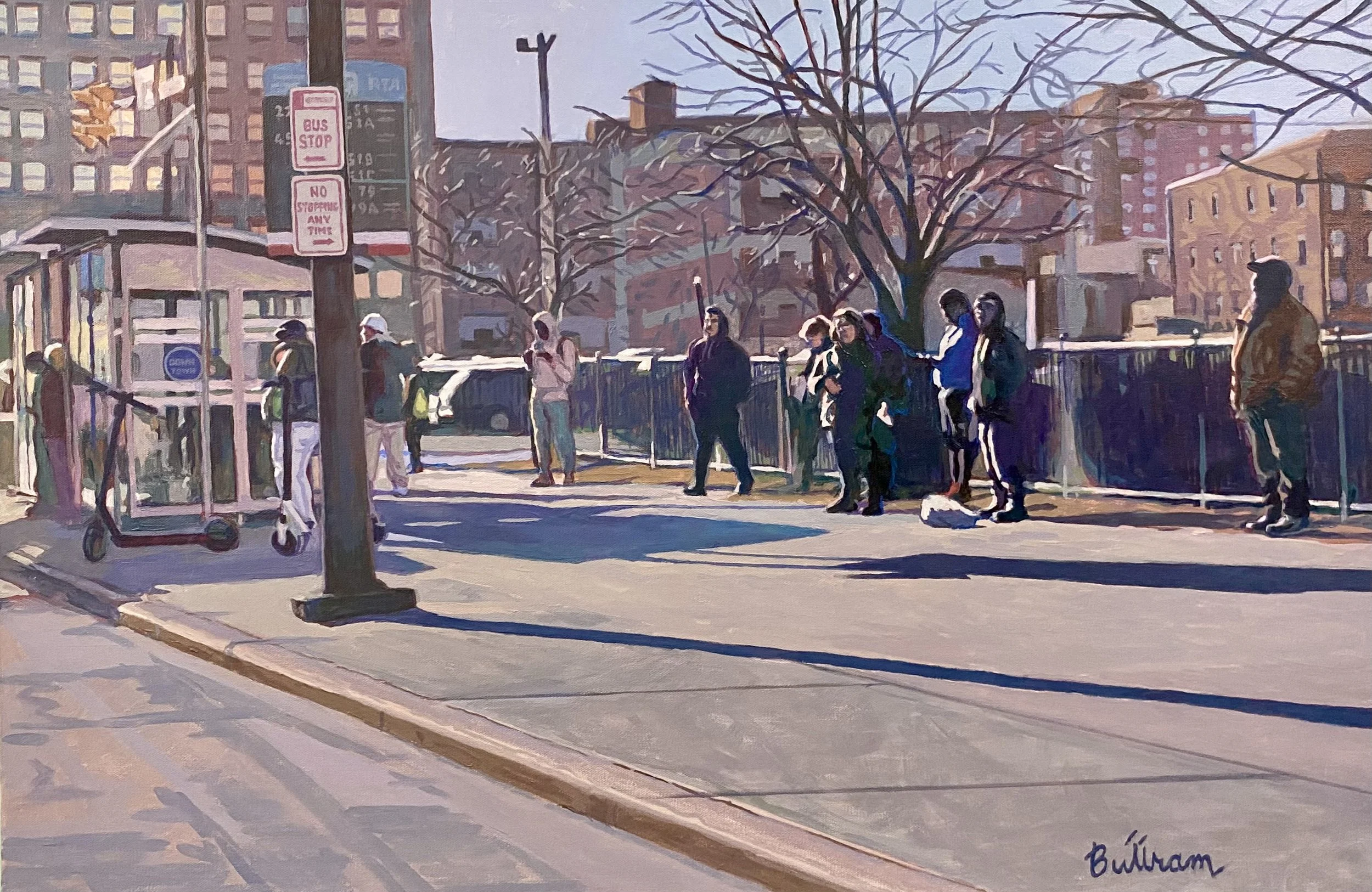
There is also a sense of humility and sometimes humor in his work. He recognizes the circumstances in his observations- he gets it. In his depictions of people in all walks of life in the city, there is an apparent dignity and acknowledgement of person and place.
To me, it seems like he paints from a place of quiet faith in the world as it is. I wish I had that more often. Who knew a street corner or a group of people waiting for the bus could be beautiful?
David the artist is also a veteran, a retired machinist and teacher, a family man, and he is not afraid to say he is a praying man. I wanted to know more about what experiences shaped David's way of seeing the world. He was willing to share some of his origin story. The more I learned about David's life, the more I understood how deeply his work is rooted in Cleveland and representative of its nature.
David knew he wanted to draw and be an artist since age four. This was the early 1950s. His older brother was a very good drawer and that made an impression on him. Inspired by the cartoons, he drew Mickey Mouse, Donald Duck, Popeye, Woody Woodpecker, and impressed the kids at school with how good his drawings were.
He recalls thinking of himself as a “little rascal” - climbing trees and getting stuck, some mayhem involving the fire department, fighting with the neighborhood kids and avoiding bullies. He was “always young for his age” so would carry a stick to and from school so he could make it through the park without getting his lunch money taken.
He grew up with four brothers and two sisters in Miles Heights before moving to the family home on East 110th and St. Clair. His father was a driver for CTS (before RTA) whose route ran through the Glenville neighborhood. On his route, he had seen the home and purchased it for his family in 1958, when David was 11 years old. But his father was never able to share it with them because he died from illness before they moved in. David says they loved their home and neighborhood. His mom worked to support the family and they never went hungry.
While he was a student at Glenville High School, David decided he wanted to paint. He “saw Van Gogh, and that was it.” He was drawn to the thick paint and colors. His art teacher recognized his abilities, encouraged his art and took him under his wing.
For years, art was something he pursued alongside the demands of work and family, rather than instead of them. After serving as a Marine in Vietnam, David worked as a machinist at General Electric, where he learned precision work. Meanwhile, he and his wife Denise were raising a family, and David continued pursuing his art education. He attended Cooper School of Art and Cleveland Institute of Art, then Kent State University for his master’s degree. He managed to find time for painting and exhibiting during this time. He credits Denise for making this possible.
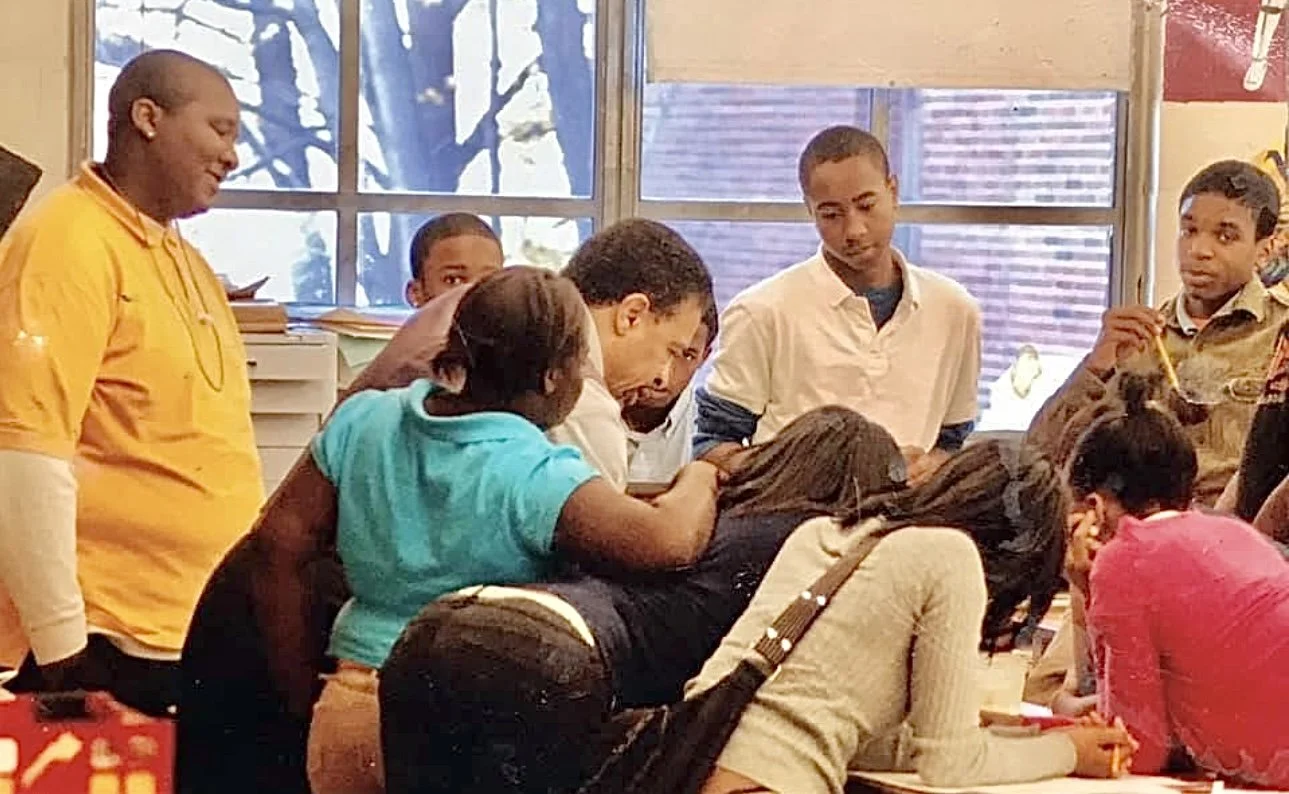
Richard Kueber, his former art teacher, was instrumental in David returning to Glenville High School as an art teacher. David taught art in Cleveland metro schools for 18 years until retiring in 2015. He shared a photo of himself demonstrating drawing to a group of students gathered around him to watch- that was a favorite moment from his years teaching.
David’s lifetime achievements are impressive, but impressive to me is also his perseverance. The piece featured in this year’s Tikkanen show, East Side Shelter, is now en route to Chicago where it will be featured in the Griffin Museum of Science and Industry’s 2027 Black Creativity Juried Art Exhibition. And he is still at work, painting, and finding subjects worth our attention.
Where to see David Buttram’s Work.
Currently, he is showing ten pieces by appointment at New Bridge Cleveland on East 40th and Superior until December 10 and he has a future solo show in 2027 at 78th Street Studios. Please contact me to see his work in person. More information is available at Watershed Archive.
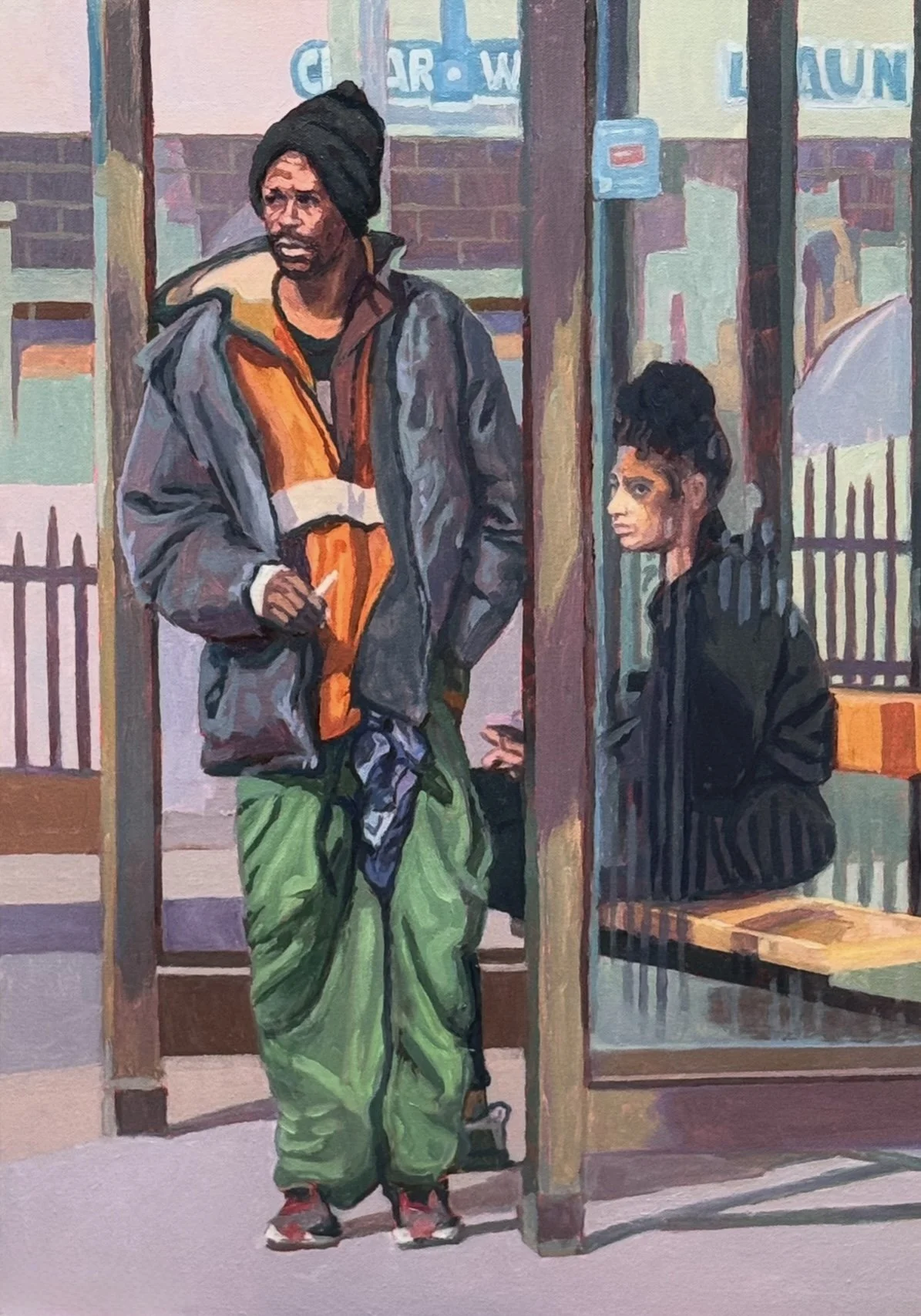
In our next article, we’ll discuss more about David’s approach, technique, and creative elements of his art.
